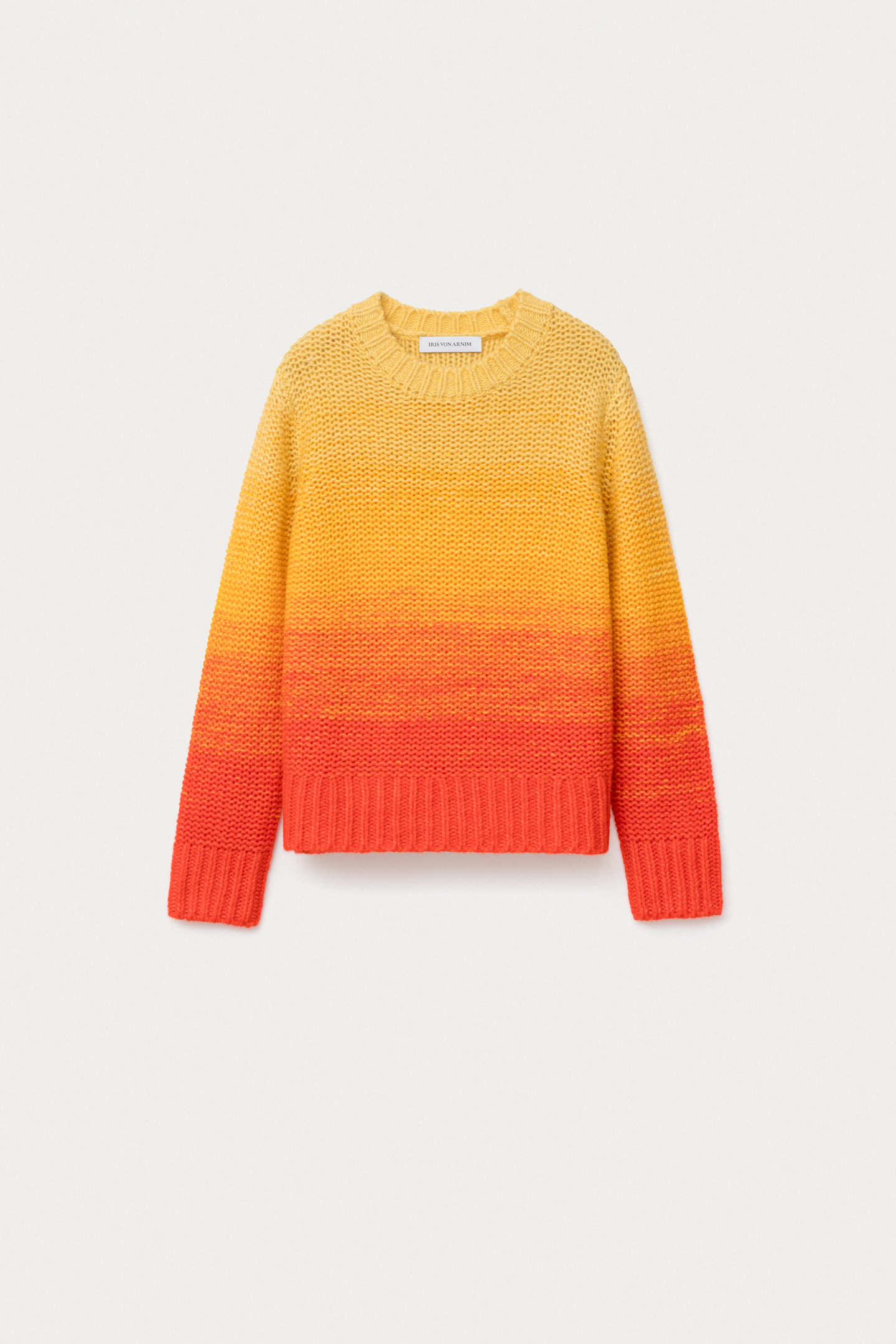
The Original Cashmere Brand
by Valentin von Arnim
50 years ago, in October 1976, my mother moved to Hamburg and opened a small store near Großneumarkt. Knitting had always been her passion, and at some point her friends only wanted to wear “Iris sweaters”. In those days, fashion brands were not really designing knitwear. It was all couture and woven.
Life had not brought her much luck so far, so she packed her things and started something new. With very little money, an idea and a lot of willpower. Friends helped renovate the tiny shop. She slept in the back and sold her sweaters in the front.
Cashmere came a little later. She was fed up with hairy angora, so she travelled to Italy looking for better yarns and new possibilities for knitwear. At a time when very few designers in Europe were working with cashmere in this way, Iris was one of the very first.
Building a company as a woman and a single mother in the 1970s made her a true pioneer.
50 years later, we are still talking about sweaters. Every day.
I just came back from her atelier, where we were discussing the pocket placement on a flower-decorated cashmere double-face kimono. The company is bigger today, the materials and techniques have evolved, and we have clients all over the world. But our mission is still the same: to make the best and most beautiful cashmere sweaters.
I love following the resale market and finding IRIS VON ARNIM sweaters from the 1980s and 90s that still have real value today. Sometimes we even buy them back because we didn’t have an organised archive in those days.
Today, that archive is our treasure. But an archive only matters if you continue to build on it.
Being an independent family business gives us something that has become increasingly valuable: time. Time to understand a material as complex and delicate as cashmere. Time to develop techniques, make mistakes and get better. Some of what we do today has taken decades to develop. Always with the same goal in mind: to make the best sweater.
Life had not brought her much luck so far, so she packed her things and started something new. With very little money, an idea and a lot of willpower. Friends helped renovate the tiny shop. She slept in the back and sold her sweaters in the front.
Cashmere came a little later. She was fed up with hairy angora, so she travelled to Italy looking for better yarns and new possibilities for knitwear. At a time when very few designers in Europe were working with cashmere in this way, Iris was one of the very first.
Building a company as a woman and a single mother in the 1970s made her a true pioneer.
50 years later, we are still talking about sweaters. Every day.
I just came back from her atelier, where we were discussing the pocket placement on a flower-decorated cashmere double-face kimono.
The company is bigger today, the materials and techniques have evolved, and we have clients all over the world. But our mission is still the same: to make the best and most beautiful cashmere sweaters.
I love following the resale market and finding IRIS VON ARNIM sweaters from the 1980s and 90s that still have real value today. Sometimes we even buy them back because we didn’t have an organised archive in those days.
Today, that archive is our treasure. But an archive only matters if you continue to build on it.
Being an independent family business gives us something that has become increasingly valuable: time. Time to understand a material as complex and delicate as cashmere. Time to develop techniques, make mistakes and get better. Some of what we do today has taken decades to develop. Always with the same goal in mind: to make the best sweater.
That, to me, is what heritage should be about. Not looking backwards, but building knowledge over time that allows you to keep moving forward.
Heritage gives us experience and know-how. Independence gives us the freedom to build on it. And relevance comes from turning both into something people still want to wear today – and for decades to come.
So that my little daughter Daisy can follow the resale market in 30 or 40 years, buying back sweaters we are making today.
The 50 YEARS Anniversary Collection
50 years of craftsmanship, reimagined through the colours of our heritage.